STRETCHING FOR RUNNERS
I think we have all heard the word stretching at some point. What matters, though, is understanding its purpose and the different forms it can take. That is what we will look at together in this blog.
Stretching for runners primarily influences:
- Joint mobility
- Muscle flexibility
These two goals of stretching reduce the risk of injury during running training, improve movement coordination, boost performance and, among other things, also speed up recovery.
To begin with, it is important to define that a complete running training session consists of several interrelated and mutually influencing parts:
- Warm-up jog
- Dynamic stretching
- Running drills
- Main training set
- Cool-down jog
- Static stretching
It is important to follow their logical order. There are also exceptions where a running session does not necessarily have to include all of the above parts, but in such cases including them will certainly do no harm.
Let us now move on to stretching itself. As soon as we have warmed up the muscles with a warm-up jog – a slower run or walk at a lower heart rate – we continue with stretching. As we can see above, there are two basic types of stretching – dynamic and static.
DYNAMIC STRETCHING
Dynamic stretching is used to activate and prepare the body, joints and muscles for the main activity – the main training set. As the name suggests, it involves warming up individual muscle groups and joints through movement. We do not lie down or stand in one place; instead, we keep the body moving while working through the various areas. We focus on correct technical execution of the exercises and favour more repetitions rather than pushing into maximum tension and range of motion.
Basic dynamic exercises include, for example (working from the lower part of the legs up to the arms):
- Circular movements of the foot in both directions (ankles)
- Walking on tiptoes or on the heels (calves)
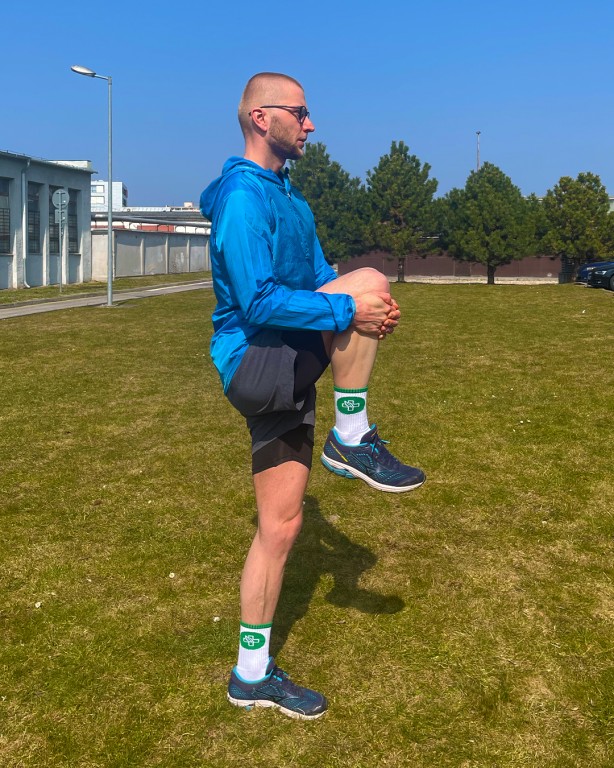
- Knee raises towards the chest, or heel raises towards the hamstrings (thighs)
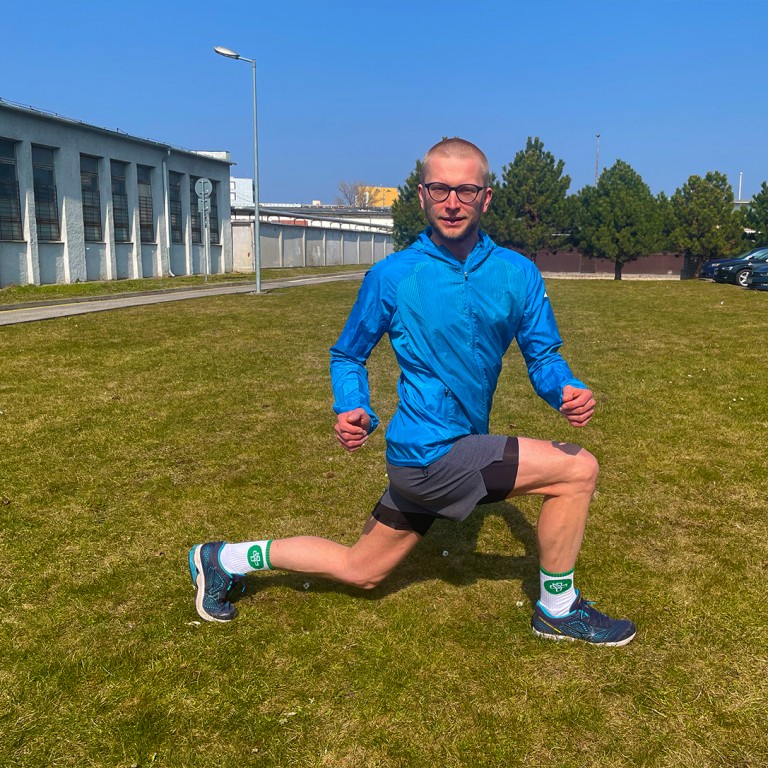
- Lunges with rotation to the side (hips and core)
- Side bends towards the leading foot (back)
- Circular movements of the arms (shoulders)
STATIC STRETCHING
Static stretching is particularly beneficial for releasing muscle tension after training and for kick-starting recovery processes. We perform it at the end of the training session, ideally about 30 minutes after finishing the run and in a warm environment. It is a relaxation phase in which individual exercises are performed in a static position, i.e. on the spot, either standing, sitting, lying down or in a supported position. We hold each position for 20–30 seconds and breathe steadily. We can certainly allow the individual muscles a greater stretch than during dynamic stretching before training, but we must remember that pushing through pain does not pay off.
Basic static exercises for the lower limbs include, for example:
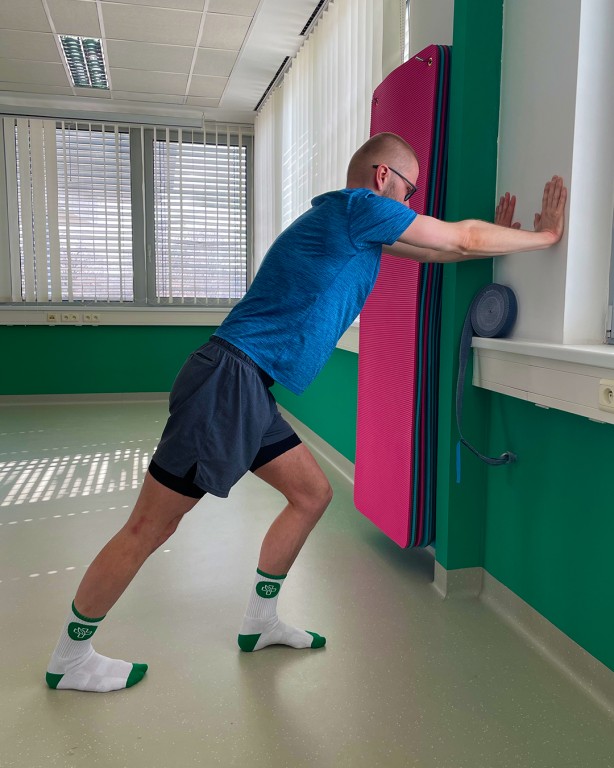
- Place the palms against a wall, extend one leg behind you, straighten it at the knee and keep the whole foot in contact with the floor (calf)
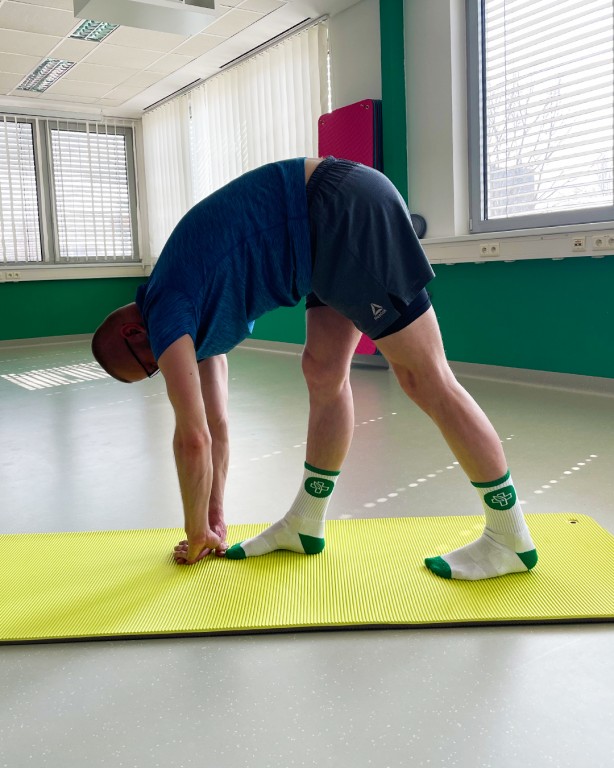
- Extend one leg in front of you with the knee straight and lean the trunk and arms towards the leg and foot (hamstring)
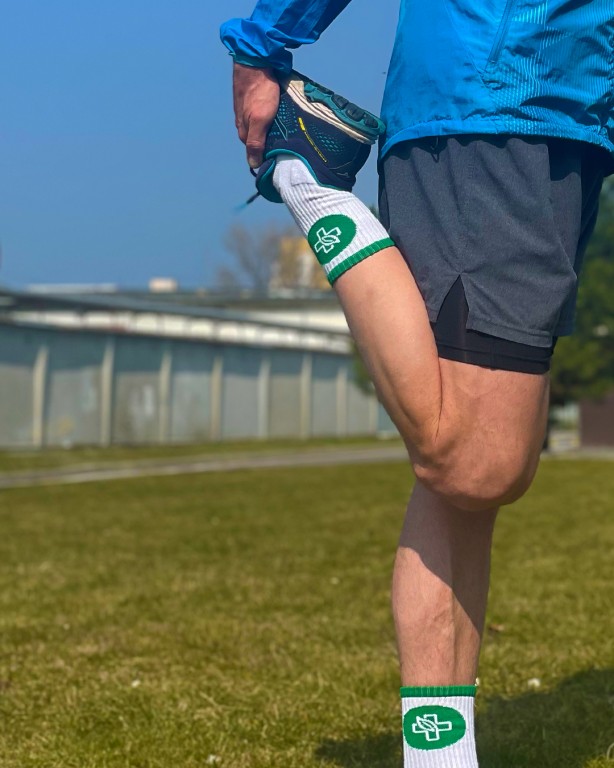
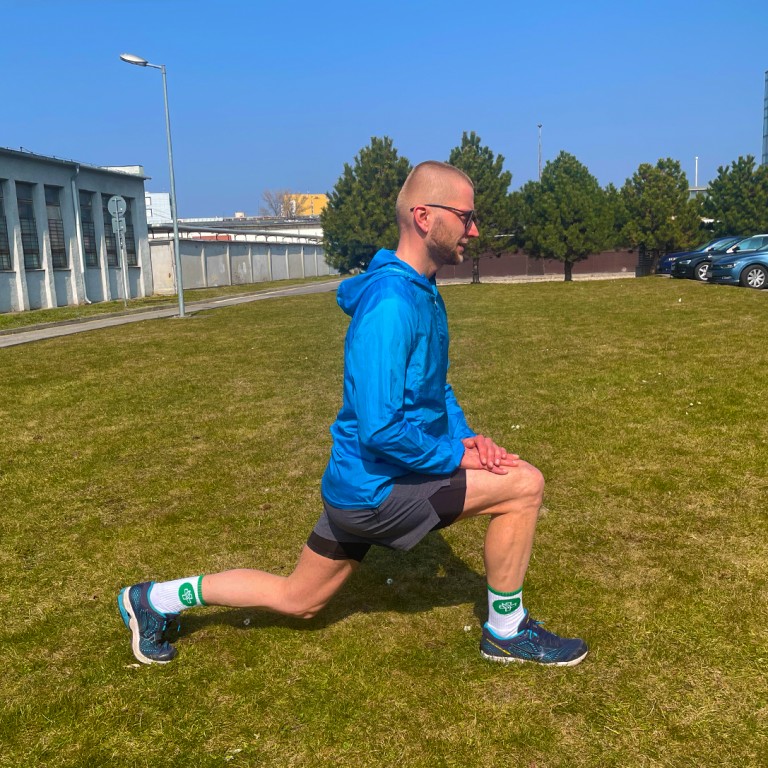
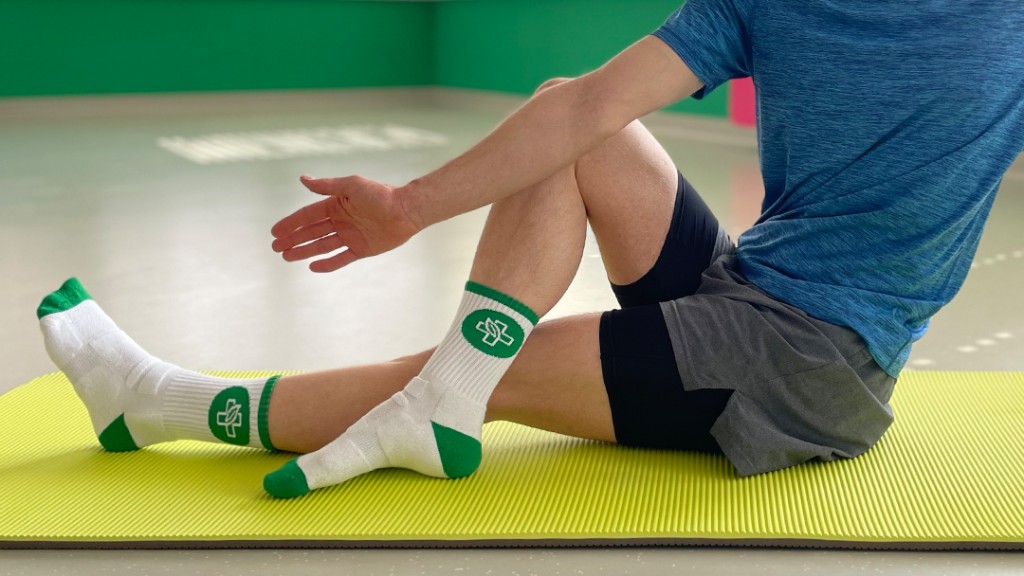
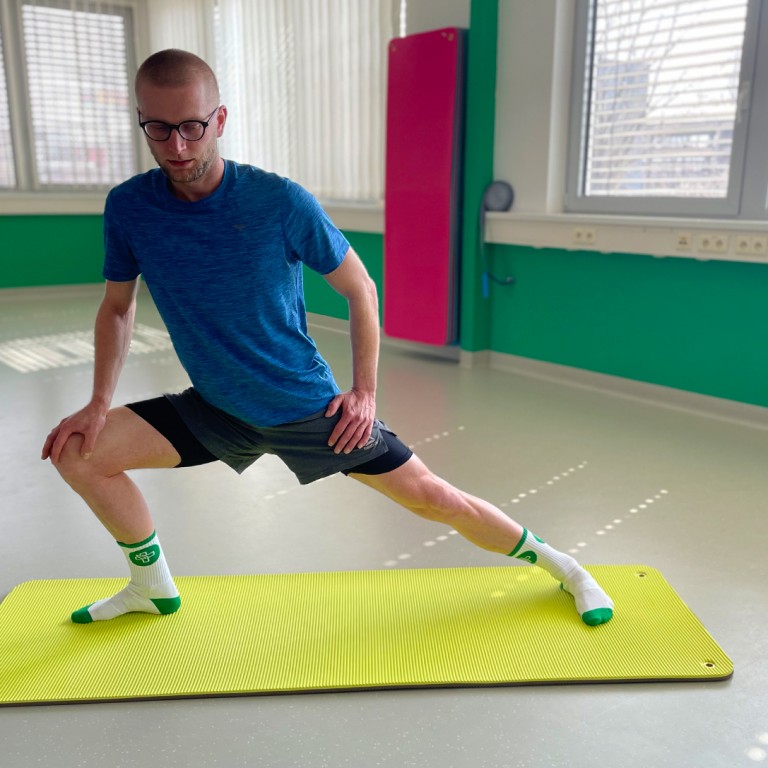
- A lunge to the side, or forwards with the pelvis tucked under (inner and front of the thigh)
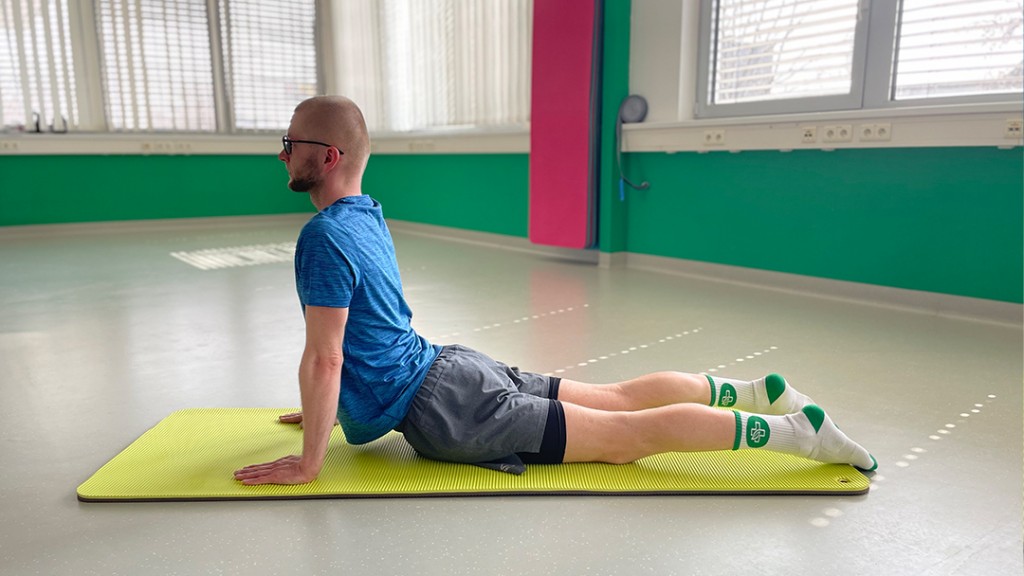
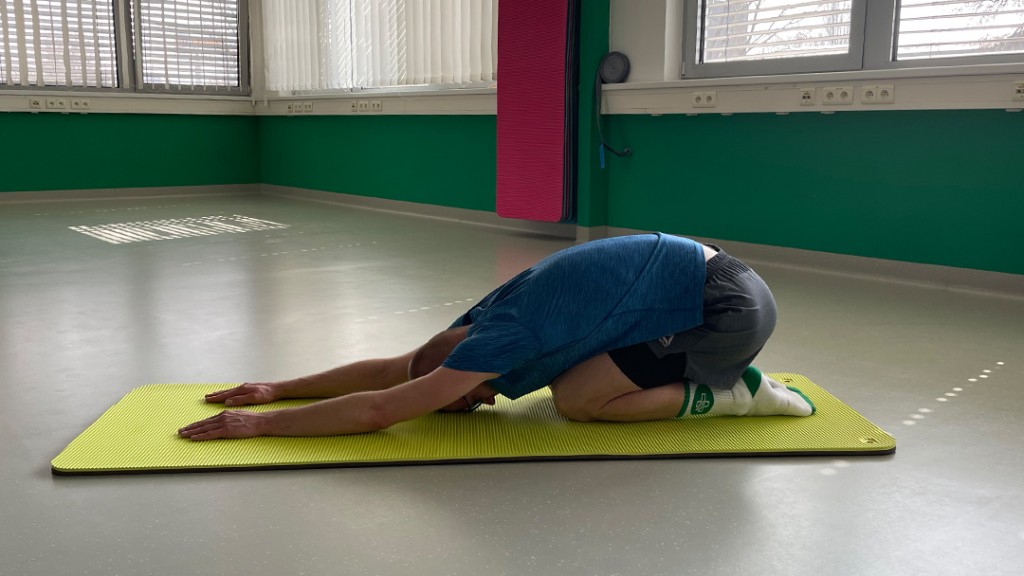
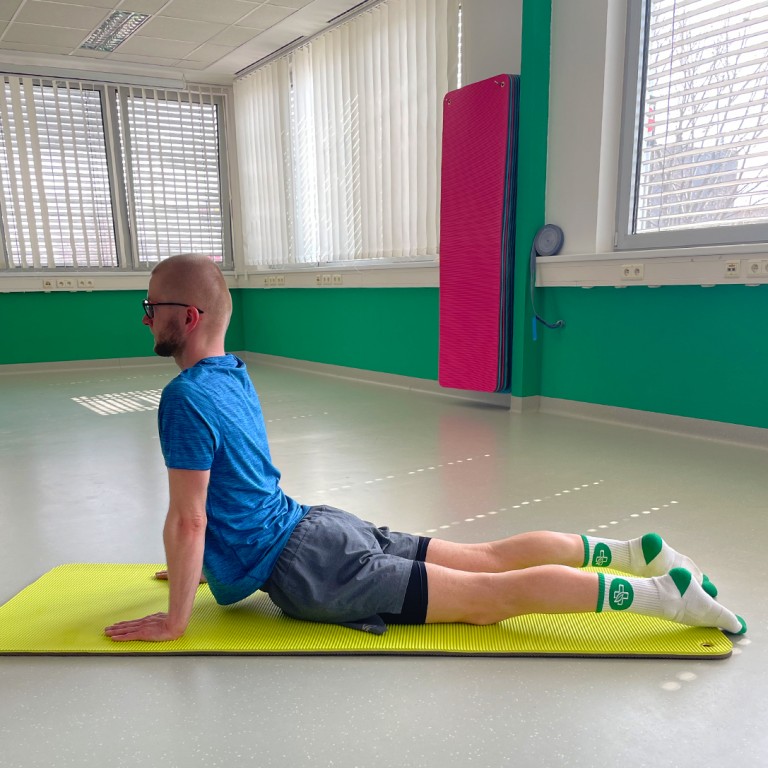
We then continue with exercises that achieve a full-body stretch.
As an alternative to, or to add variety to, both dynamic and static stretching, we can also use a Blackroll foam roller. There are two material firmnesses to choose from. Before a running session it is ideal to briefly work through all the main muscle groups we will be using when running. We focus on more repetitions and less pressure. After training, on the other hand, we can work on only selected muscle groups that were more heavily loaded during the run, and we can also increase the pressure on the particular muscle group.
In this blog we have summarised the basic principles of stretching for runners. What matters, however, is regularly putting these principles into practice in our training. Let us keep this in mind during our very next run and make stretching an integral part of our training routine.
Article author: running coach Šimon Sloboda